

Move from a catastrophic retention rate to an addictive app
Your mobile app has a problem: users download it, open it once, and then disappear. The issue is not technical. It's the design.
*As Soon As Possible (tired of anglicisms)
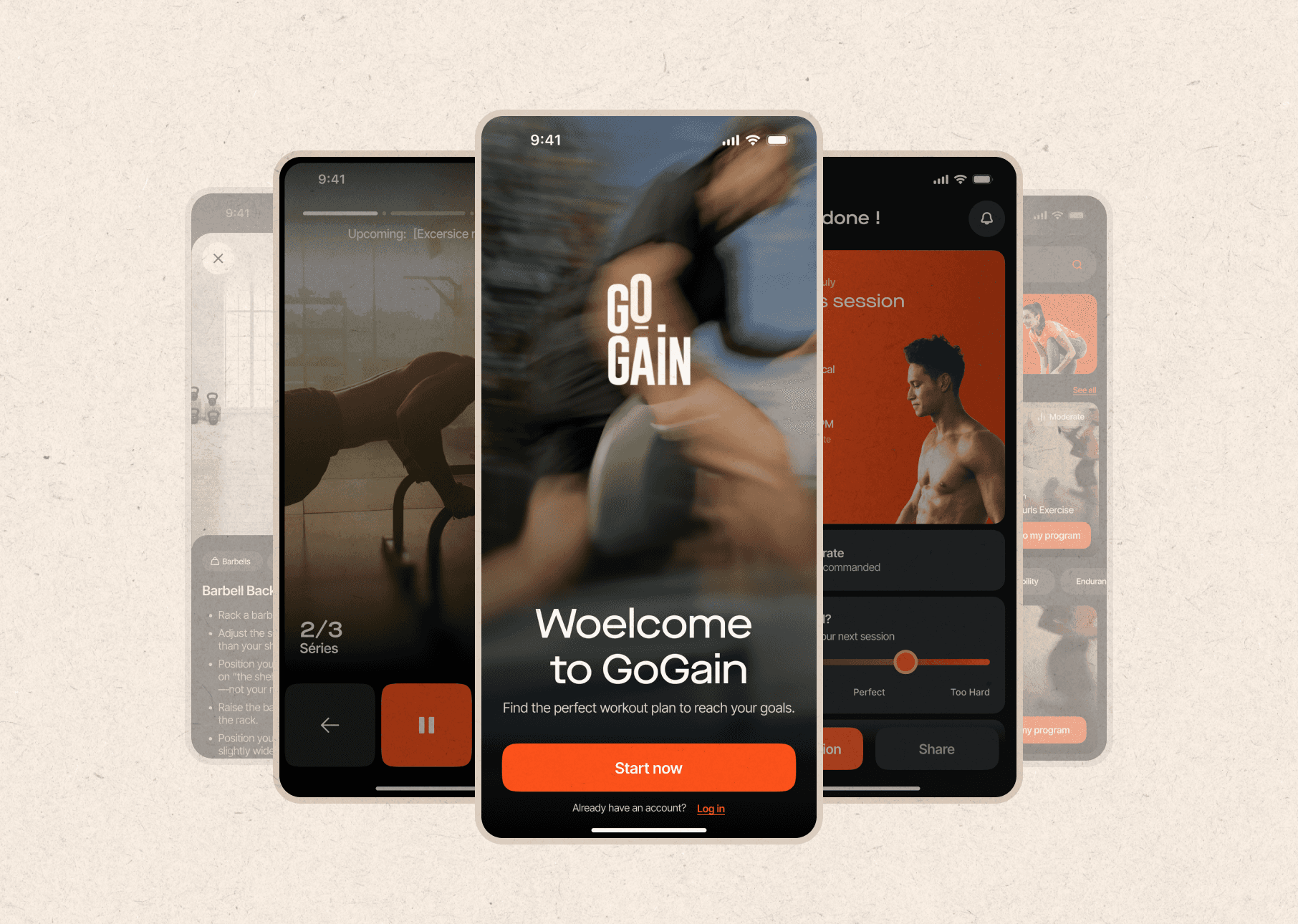
+127%
Average increase in the retention rate J+7
-43%
Reduction of the dropout rate during the first onboarding
6-8 weeks
From the audit to the redesigned and tested app
Why 80% of mobile apps have a catastrophic retention rate
The problem is not the concept. It is the user experience that has been butchered by amateur design choices.
The drama of apps "ported" from the web
Many mobile apps are just responsive versions of the website compressed into a webview. The result? Heavy navigation, non-native interactions, unbearable loading times. The user immediately feels that it is not a real app. They uninstall.
01 /
The agencies deliver mock-ups... untested
Traditional agencies deliver stunning Figma screens to you. The problem is: no one has tested whether the onboarding is understandable, if the CTAs are thumb-clickable, or if the flow is smooth. You discover the friction after the development. Too late.
02 /
A native app. Designed mobile-first. User tested.
At Dafolle, we design apps that are thought out for mobile from the start. Native iOS/Android navigation, intuitive gestures, smooth micro-interactions. And above all: user testing sprint by sprint. We don’t deliver screens. We deliver a validated experience.
03 /
Our ServicesMobile App Design
Everything you need, in a single subscription
01 /
Native iOS & Android design
Compliance with Human Interface Guidelines (Apple) and Material Design (Google). Your app does not "web view".
02 /
Optimisation for thumb use
Touch comfort zones, accessible CTAs, native gestures (swipe, long press). Tested on all screen sizes.
03 /
User testing at every sprint
We test the onboarding, critical flows, and navigation with real users. Not after development. During.
04 /
Micro-interactions & fluid animations
Transitions between screens, visual feedback, loading states. An app that breathes, not that lags.
05 /
Optimized dev handoff (Figma + specs)
Auto-layout components, iOS/Android variants, documented animation specs. Developers don’t guess, they implement.
06 /
Continuous evolution by subscription
Your app is evolving (new features, A/B tests, adjustments). The design follows in real time. No new estimate for every iteration.

Week 1-2
UX Audit & Analysis of Frictions
We analyze your existing app (or your competitors). Heatmaps, analytics, user tests. We identify where people drop off.
Week 3-4
Redesign of critical flows
We are tackling high-impact flows: onboarding, registration, main action (checkout, publication, etc.). Design + clickable prototypes.
Week 5-6
User tests & Iterations
We test the prototypes with 10-15 real users. We iterate on the identified frictions. No fixed deliverable.
Week 7-8
System design & Developer handoff
We finalize all screens, components, states (empty, error, loading) and micro-interactions. Optimized Figma → Dev handoff.
Post-launch
Analytics tracking & Optimisations
We track the metrics (retention, conversion, abandonment). We continuously optimise through A/B tests and adjustments.
Why 90% of mobile apps look like compressed websites
Spoiler: because no one really designs mobile-first.
The tools we use for Mobile App Design

Any questions? We respond within 48 hours.
It is known that entrusting your design to an external team,
raises some questions. Here are our answers.
Which platform are you working on: iOS, Android, or both?
Do you also develop the app?
User testing is done with our real users or panels?
How much does it actually cost?
Are you managing the redesign of an existing app or just creating from scratch?
Can you integrate our existing design system?
Are animations and micro-interactions really implementable by developers?
Do you also create the app icon and the App Store screenshots?
Can we A/B test multiple versions of certain screens?
How long after the redesign do we see results on retention?