
Apple didn't invent anything: they just copied your electric toothbrush.
Your electric toothbrush has a direct link to the iPhone. No, seriously.

Dylan R.
Apple, the kings of innovation? No, the kings of remix.
While everyone marvels at Apple's "revolution", let me reveal a well-known secret the design industry has known for decades: every iconic Apple product is a copy. Not a distant inspiration. A copy. Almost pixel for pixel, curve for curve.
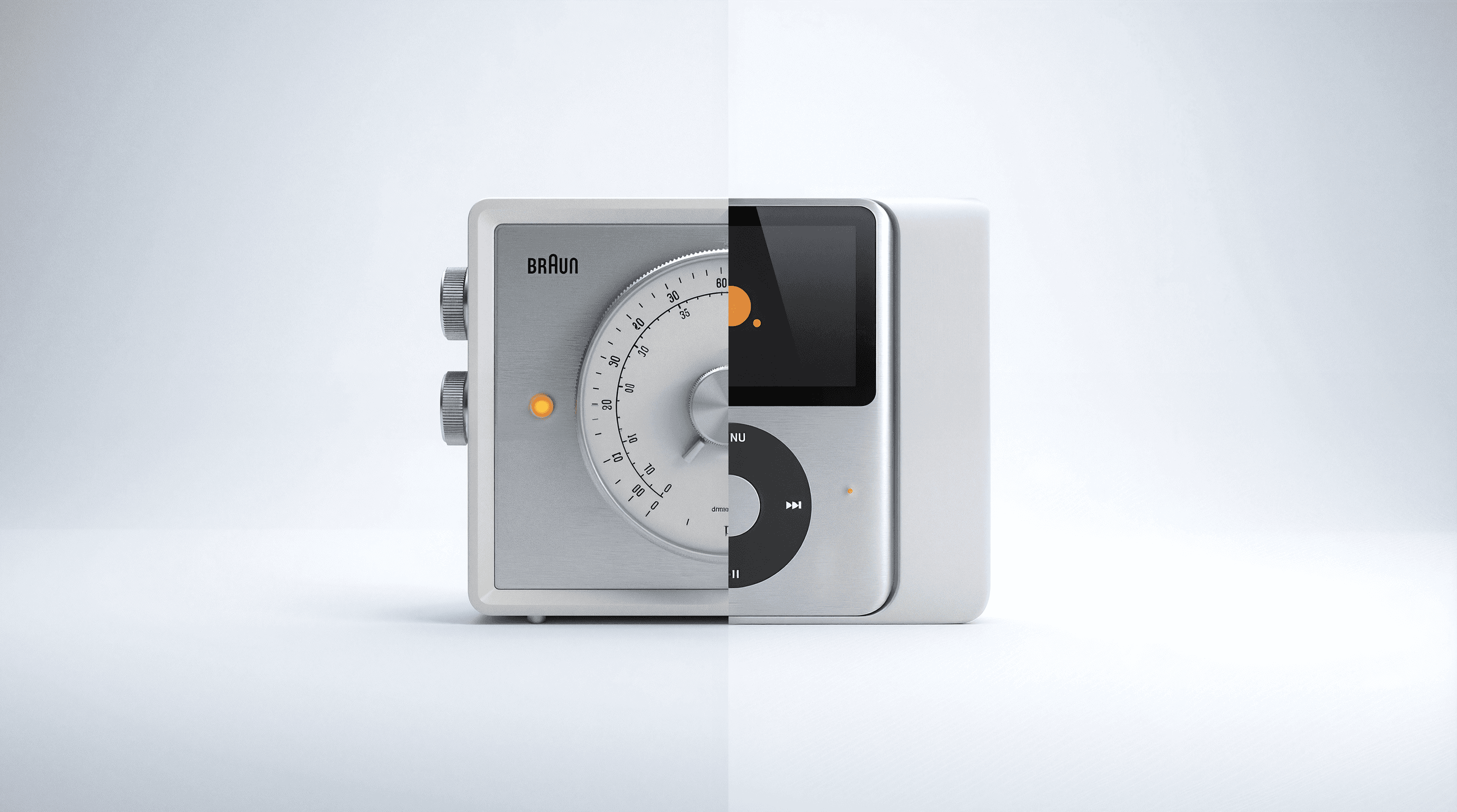
The 1958 T3 Radio that looks eerily like the iPod. The 1977 ET66 calculator that could be the mother of your iPhone Calculator. That LE1 loudspeaker from 1959 which, placed next to an iMac, makes you doubt the chronology.
All these objects have one thing in common: Braun. That German brand of razors and electric toothbrushes you pass in your bathroom without a thought. And behind Braun, one man: Dieter Rams, the designer obsessed with a radical idea: creating objects so self-evident that we forget them.
This isn't theft. It's the ultimate understanding of what good design really is.
And if you're wondering why your latest product redesign already feels like reheated leftovers even though it's only 6 months old, that's exactly what we're going to break down. Because the difference between a design that lasts 50 years and a Dribbble effect that ages like milk is precisely what Rams and Apple understood, unlike 99% of today's designers.
Want us to audit your product with that same logic of longevity? Let's discuss what really makes a design stand the test of time.
The irrefutable evidence: when 1958 meets the iPod
The visual evidence is overwhelming. You don’t need to be a designer to see it.
The Braun T3 Radio, 1958. This circular dial. This absolute purity. This immaculate white. Put an iPod next to it and try to explain the fundamental difference to me. Apple’s clickable dial? It was already there in 1958, already perfect. The minimal interface that shows only the essentials? Rams had already codified it.
The ET66 Calculator, 1977. The round buttons. The functional colour coding (operations in colour, numbers neutral). The millimetre-perfect spacing. Open the Calculator app on your iPhone. It’s the same. Exactly the same philosophy, translated onto a touchscreen. Apple merely adapted hardware into software.
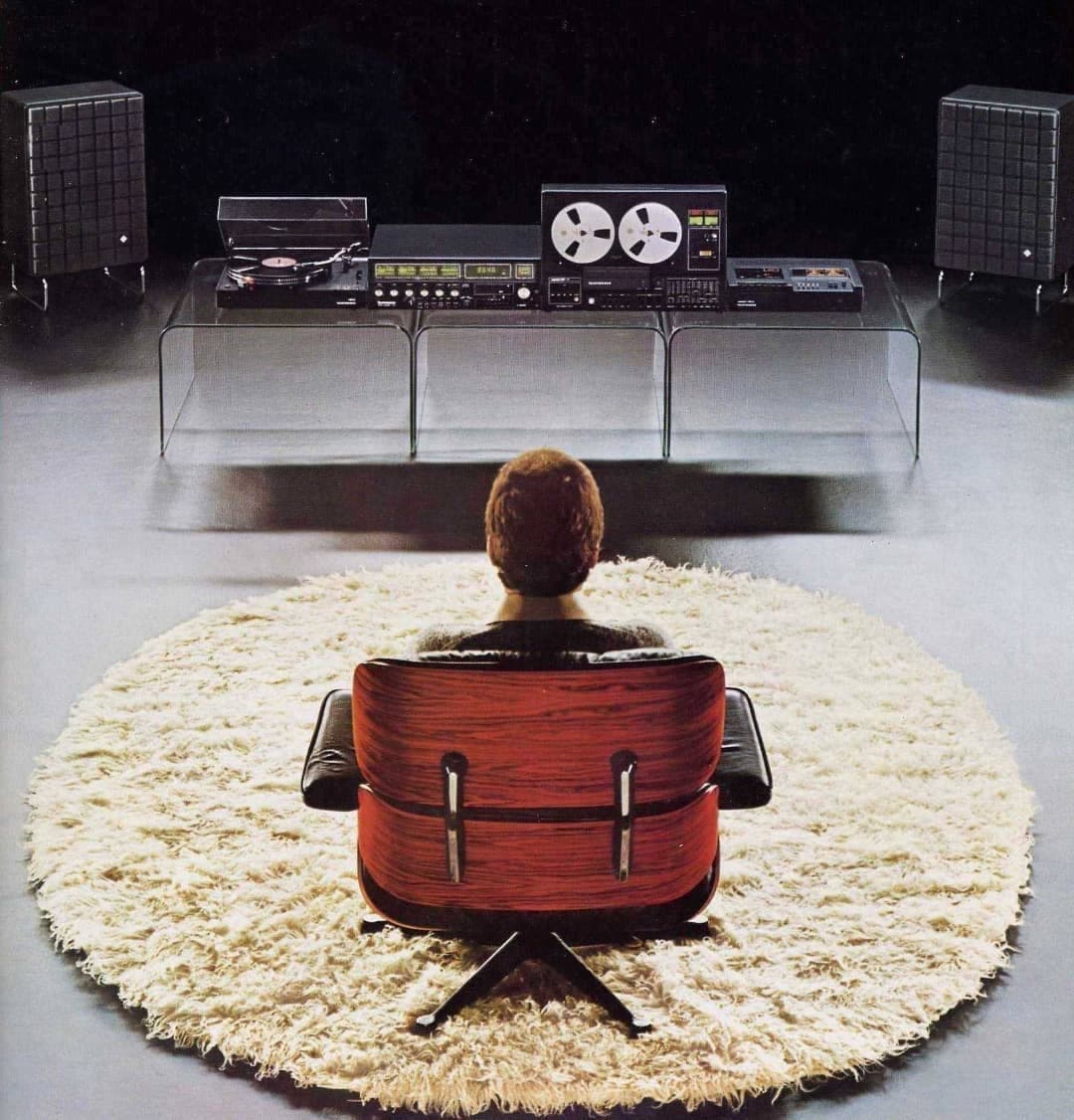
The LE1 Speaker, 1959. The angled stand. Aluminium and white. That silhouette which defies gravity with elegance. Put an iMac G4 next to it. The resemblance is not striking, it is violent.
And you know what’s crazy? These Braun products are over half a century old. They should smell of mothballs, look like dusty museum relics. But no. They’re still relevant. Still modern. Still desirable.
Because Dieter Rams never designed for 1958. He designed for ever.
The time gap proves something fundamental: when design is reduced to its essential function, stripped of all fashion, all trends, all artifice, it becomes timeless. It transcends decades.
Apple didn’t steal. Apple recognised genius. And rather than reinventing the wheel (spoiler: that’s often a losing strategy), they applied principles that had already proven themselves over decades.
That is the strategic intelligence of design. Not originality at any price. Enduring relevance.

Dieter Rams in the room: the obsession with "less but better"
Who is Dieter Rams? A discreet German, born in 1932, who spent 40 years at Braun creating objects nobody noticed. And that was exactly his goal.
His mantra: "Weniger, aber besser" – Less, but better.
Rams was obsessed with a counter-intuitive idea for the time (and even more so today): creating objects so obvious that you forget them. The ultimate design, for him, is the one that disappears in favour of use. It's the absolute anti-bling. The antithesis of everything Instagram preaches.
His 10 design principles are not an aesthetic checklist to make things look nice. They are functionalist commandments that still resonate today, especially in the world of SaaS and digital products:
Good design is innovative – But innovation does not mean reinvention. It means incremental improvement of what already exists.
Good design makes a product useful – Function > decoration. Always. If your fancy animation slows down the user journey, it has no business being there.
Good design is aesthetic – But aesthetics are the result of refined function, not an end in themselves. Beauty emerges from coherence.
Good design makes a product understandable – A clean UX should never require a 10-minute tutorial. If your user has to think, you've already lost.
Good design is unobtrusive – Your users are not there to admire your interface. They are there to get a task done. Serve them.
Good design is honest – No dark patterns. No false promises in your UI. Transparency builds trust.
Good design is durable – A durable UI does not chase trends. It ignores them. It is built to last for years without becoming irritating.
Good design goes right down to the last detail – The devil is in the micro-interactions, the spacing, the hover states. That's where the difference between "it works" and "it's excellent" is decided.
Good design is environmentally friendly – Translate that to the web: a lightweight, fast, accessible site. Not a 10MB behemoth that loads 47 useless scripts.
Good design is as little design as possible – Less is more is not a cliché. It is a discipline. Every element must justify its presence or disappear.
What is fascinating is that these principles perfectly describe what makes a SaaS convert today: brutal clarity, function > decoration, relevance that lasts.
The design that wins is not the one that impresses in a Dribbble screenshot. It's the one that solves a problem so well that the user doesn't even think to look for an alternative.
Want to know whether our design offer is right for you? We'll walk you through everything.
The Dribbble trap vs lasting relevance
Let's talk about the real design problem in 2025: web fast fashion.
On one side, you have the Braun/Apple philosophy: timelessness, function, discretion. On the other, you have Dribbble: glassmorphism, neumorphism, bento grids, and all those wow effects that have flooded portfolios for the past 6 months and will be dated in another 6.
Trendy design goes off like milk in the sun.
It's not a matter of taste. It's a matter of longevity. These flashy effects, these over-the-top animations, these interfaces cluttered with frills... they have a half-life of 6 months at most. After that, they become embarrassing.
Why? Because they belong to a trend, not to a functional logic. They exist to impress other designers, not to serve users.
Take a concrete example: a website overloaded with parallax animations, complex transitions, micro-interactions at every pixel. On Dribbble, it gets 10k likes. In real life? It slows loading, distracts the user, hides the important information, and in the end... it kills your conversion rate.
Compare that with a site like Stripe. Linear. Notion (before they started doing anything and everything). A brutal clarity. Almost boring at first glance. And yet, that's what performs.
Because these products understood what Rams was preaching 60 years ago: good design must still be relevant in 3 years, not just today.
Your job as a designer (or decision-maker) is not to follow trends. It's to ignore them in favour of the obvious needs of use. Always ask yourself: "Does this element help my user complete their task?" If the answer is no, bin it.
Sustainable design is the kind that stands the test of time because it is rooted in function, not fleeting aesthetics. It's the kind that doesn't need a redesign every 18 months because "it looks old".
Conclusion
Apple won because they understood a truth that everyone ignores: design is not art. It is durable problem-solving.
Jony Ive was not an artist in search of personal expression. He was a problem-solver obsessed with the obvious. And when he discovered the work of Dieter Rams, he did not try to do it "in the style of". He applied the same functionalist principles to the digital age.
The result? Products that stand the test of time without ageing a day.
Your takeaway today: stop trying to reinvent the wheel. Stop chasing the trend of the moment. Stop designing to impress your peers.
Look for what is obvious in use. Strip it back to the bone. Build to last. Good design is the kind you do not notice because it does exactly what you expect of it, perfectly, without friction.
That's the lesson of Braun and Apple. And it's exactly what too few products apply today.